Voltify's Revolutionary Vision: Decarbonizing U.S. Railroads
Daphna Langer, co-founder of the start-up Voltify, is on a mission to reshape one of America’s most enduring industries—the freight rail system—by replacing diesel fuel with battery-electric power. This transformative shift could save U.S. rail freight companies a staggering $94 billion over the next 20 years, according to a study published in Nature Energy.
From Diesel Dependence to Clean Energy Innovation
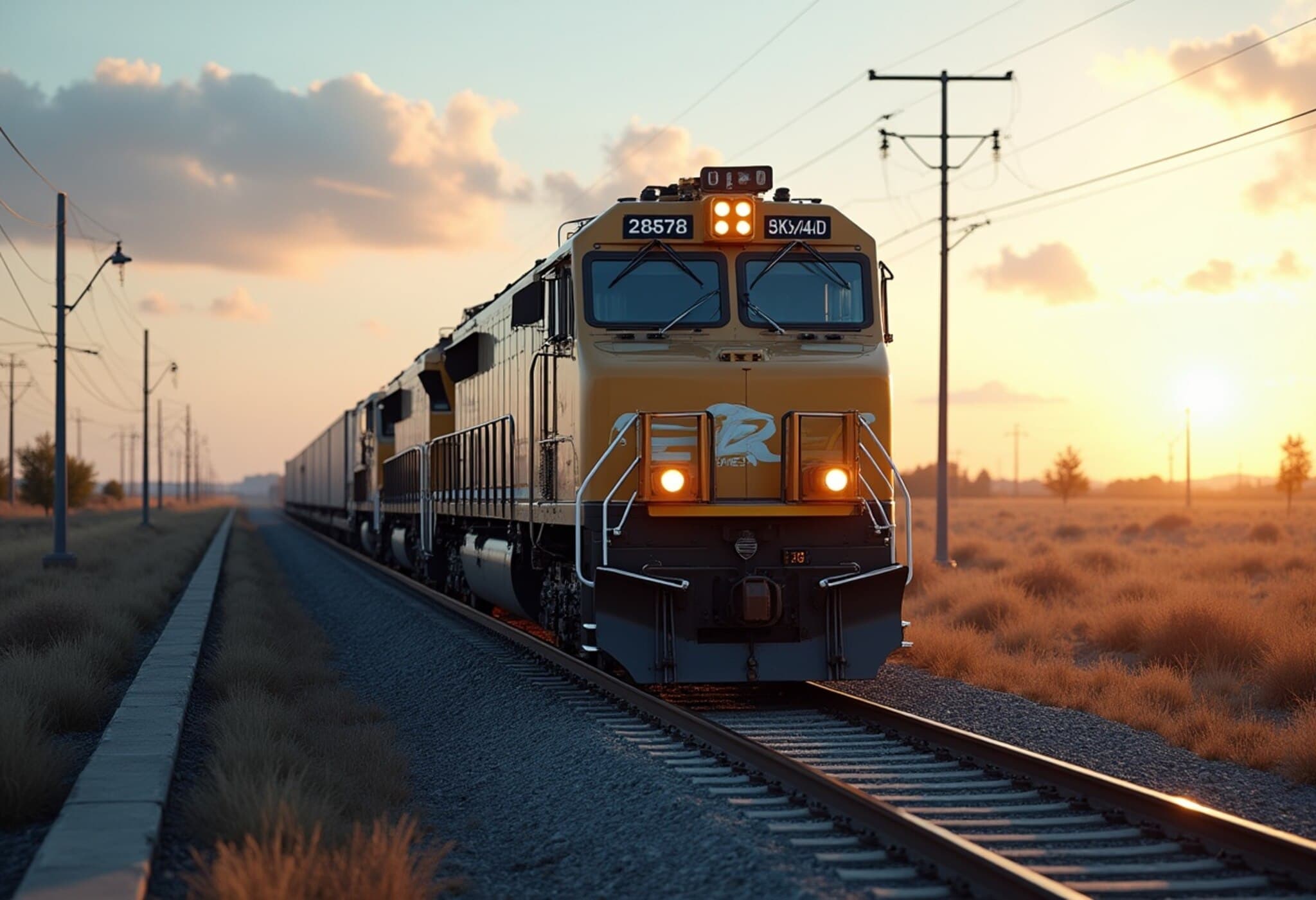
The U.S. freight rail industry currently relies heavily on diesel locomotives to move goods across nearly 140,000 miles of track. With six major Class 1 freight railroad companies spending over $11 billion annually on diesel fuel—Union Pacific alone expended nearly $2.5 billion in 2024—there is significant economic and environmental pressure to find better alternatives.
Voltify plans to introduce VoltCars: specialized sodium-ion battery packs that attach to existing locomotives, which can recharge on a network of new, solar-powered energy microgrids. These microgrids, envisioned to number around 1,400 across North America, will provide a reliable, renewable energy source adapted to the rail industry’s rigorous demands.
The Challenge of Convincing a Traditional Industry
Railroads are a conservative sector where reliability and uptime are paramount. Initial meetings with railroad executives revealed skepticism—not about the concept of green energy, but about the operational feasibility. The biggest concerns? The time it takes to recharge batteries and the availability of consistent power.
Voltify spent a year developing sophisticated forecasting algorithms to anticipate energy needs on every route and ensure that power supply never falters. Langer emphasized, "The rail companies said, ‘We don't really care about the energy source. We need to make sure there’s always energy ready to go.’"
Building Trust Through Partnerships and Pilots
Since its founding in 2023, Voltify has been in dialog with several top rail operators, securing agreements for pilot projects with smaller railroads in late 2025 and plans for commercial deployments with Class 1 railroads as early as 2026.
This approach underscores a broader truth in energy transition technologies: successful adoption hinges on proving reliability first.
Industry Context: Where Battery-Powered Trains Stand
Voltify is not alone in the battery-electric push. In 2019, Wabtec developed their FLXdrive, a battery locomotive designed to cut diesel consumption and emissions by approximately 30%. These locomotives are being introduced in Australia and poised for North American and South American markets.
However, challenges remain in battery capacity, charging infrastructure, and up-front investment. Wabtec's Tim Bader points out, "Like any emerging technology, these challenges will diminish as research continues and solutions evolve."
Expanding Potential Beyond Freight
Battery power also shows promise in passenger rail. Siemens Mobility recently launched the Charger B+AC battery-electric locomotive, already sold to New York's Metropolitan Transportation Authority and Metro-North Railroad. With ranges currently up to 100 miles, advances in battery tech are expected to extend this, making on-board stored energy an effective complement to traditional electrification.
Tobias Bauer, acting CEO of Siemens Mobility North America, notes, "A full transition to battery-powered freight hinges on specific routes and infrastructure, but the potential is undeniable."
Economic and Environmental Impact: More Than Just Dollars
- Environmental Benefit: The rail industry is a significant contributor to carbon emissions. A 5% annual emissions reduction is required by 2030 to reach net-zero targets, highlighting the urgent need for cleaner alternatives.
- Cost Savings: Switching operations from diesel to battery power could save the freight rail sector nearly $100 billion in fuel and operational costs over two decades.
- Job Creation and Innovation: Developing thousands of energy microgrids and manufacturing advanced battery systems could spur new economic opportunities across the renewable energy and transportation sectors.
Looking Ahead: The Road to a Battery-Powered Rail Network
Voltify’s ambition sits at the intersection of decarbonization, innovation, and industrial transformation. Success will not only rely on technology but navigating the entrenched operational structures of a 19th-century industry.
Could the future of freight rail across America soon be electric? Voltage is building—quite literally—and if Voltify and its partners can deliver on their promise, this could signal a seismic shift for an $80-billion industry.
Editor's Note
Voltify's proposal to power America's freight trains with batteries rather than diesel is more than a technological upgrade—it’s a test case for how legacy industries can embrace clean energy at scale. As climate targets tighten and energy costs rise, railroad electrification could be pivotal. Yet, critical questions remain: Can battery innovations meet railroads' relentless demand for uptime? Will infrastructure investments keep pace? And how will this transition affect labor, regional economies, and supply chains? Monitoring these developments will be essential for policymakers, investors, and the public to understand the evolving transportation energy landscape.