
The Blockchain Shield: Venezuela’s Crypto Strategy Amid U.S. Sanctions
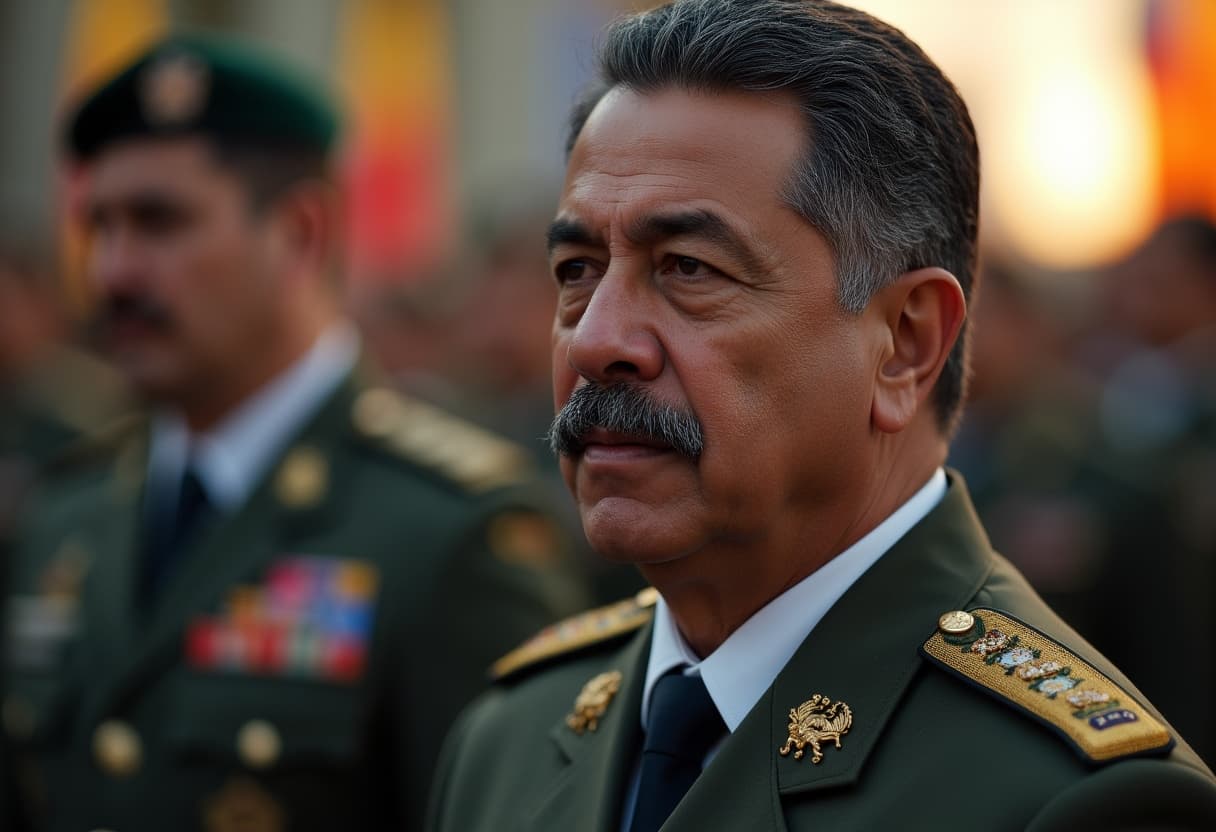
Amid escalating economic turmoil in Venezuela, President Nicolás Maduro’s government is increasingly turning to cryptocurrency as a lifeline against stringent U.S. sanctions. This financial pivot is reshaping how Venezuela navigates its ongoing crisis, challenging traditional economic warfare tactics and raising complex questions about sovereignty, innovation, and resilience in geopolitics.
Economic Crisis Deepens Despite Initial Stability
After years of one of the most severe economic collapses outside war-torn regions, marked by hyperinflation, crippling shortages, and mass migration, Venezuela saw fleeting signs of economic recovery following market-friendly reforms and political repression under Maduro’s leadership.
However, in 2025, renewed sanctions from the United States—most notably labeling Maduro's administration as a narcotics trafficking entity—have reversed much of these gains. Inflation has soared back into triple digits, estimated to spike to around 600% in 2026, while the economy is forecasted to shrink by 3%, pushing Venezuelans into deepening hardship.
Cryptocurrency as an Unconventional Economic Tool
Faced with tightened sanctions restricting traditional oil revenue pathways, Venezuela’s government has pioneered the use of cryptocurrencies—particularly stablecoins pegged to the U.S. dollar—to circumvent financial blockades. This novel approach includes:
- Directing a significant share of oil payments from China into cryptocurrency rather than fiat currency.
- Channeling crypto revenues into the national economy via state-sanctioned crypto exchanges.
- Privatizing struggling oil fields to ramp up production by 12%, generating additional export revenue.
These steps have effectively allowed Venezuela to become arguably the first country to manage a considerable portion of its public finances through crypto assets—hastening financial innovation amid crisis.
Political and Economic Resilience: A Double-Edged Sword
Experts observe that while Venezuela’s economic outlook is bleak, Maduro’s administration has learned how to weather such storms, adapting strategies to maintain political control despite growing poverty. Economist Francisco Rodríguez notes, “If there’s a country that proves that economic collapse does not weaken its government, it’s Venezuela.”
The reduction of Chevron’s role in Venezuelan oil exports and the stringent controls over currency flows have consolidated state dominance over vital income streams. Simultaneously, the government’s aggressive repression—jailing journalists and cracking down on black market activities—reflects the political costs of sustaining an artificially managed economy.
Opaque Crypto Economy: Risks and Rewards
The rapid infusion of cryptocurrency into Venezuela’s economy has introduced new layers of opacity, offering both a shield from sanctions and a playground for potential corruption and illicit activity. The government’s acceptance of stablecoins—particularly Tether—now accounts for up to half of all legal hard currency inflows.
The use of Binance, the world’s largest crypto exchange, highlights the complex intersections between sanction evasion and regulatory scrutiny—exemplified by the founder’s past legal troubles linked to money laundering.
While crypto provides flexibility, it also carries risks of financial instability. The staggering 50% gap between the official bolívar rate and black market valuations pressures the administration to consider unpopular moves like currency devaluation, which could erode purchasing power and risk internal dissent.
U.S. Policy Implications and Economic Future
From a U.S. policy perspective, Venezuela’s crypto maneuvering challenges the efficacy of sanctions designed to isolate Maduro’s regime. It reveals how technological adaptations can undermine traditional economic pressure tactics, posing questions for future sanction frameworks.
Looking ahead, Venezuela confronts a precarious decision: either endure deeper economic pain with currency and price controls or risk political instability by allowing inflationary pressures to wash over vulnerable populations. The evolving interplay of crypto finance, authoritarian governance, and international diplomacy positions Venezuela as a critical case study in 21st-century economic conflict.
Editor’s Note
This unfolding narrative underscores the transformative power of cryptocurrency in geopolitics, highlighting its dual role as an economic lifeline and a conduit for governmental opacity. As Venezuela stands at a crossroads of economic survival and political control, its experience raises pressing questions about the future effectiveness of sanctions, the ethical dimensions of crypto-enabled economic resilience, and how technology reshapes power dynamics in fragile states. For policymakers and observers alike, Venezuela’s case is a cautionary tale of innovation born from crisis, with profound implications for international law and global economic governance.