Venezuela’s Controversial Jesuit Priest Bridges Faith and Politics
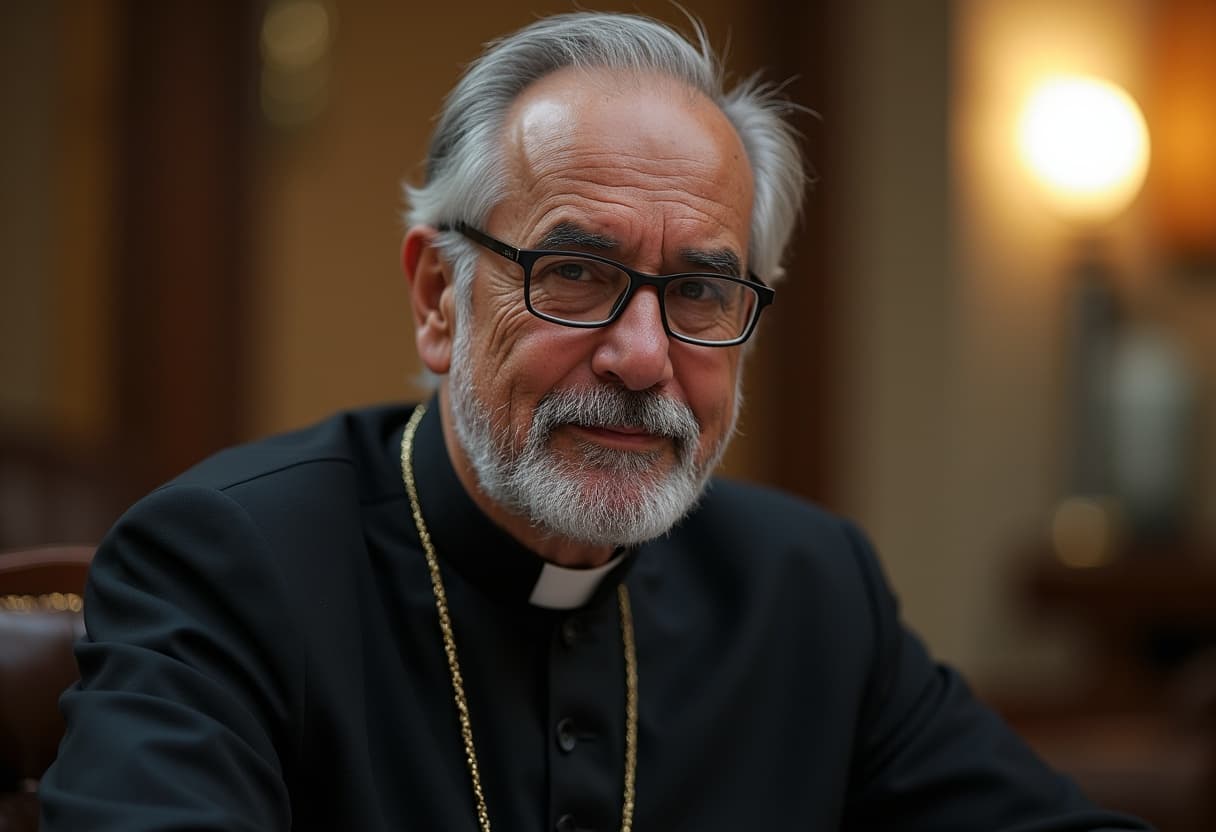
In Venezuela’s turbulent political landscape, few figures embody the complex entanglement of religion and power quite like Father Numa Molina. This 68-year-old Jesuit priest, known for decades of grassroots advocacy, has evolved into a key confidante of President Nicolás Maduro, a connection that has stirred debates across the nation’s Catholic community.
A Priest’s Journey from the Pulpit to Political Influence
Father Molina’s story is not just about spiritual leadership but also about navigating the fraught intersection of faith and authoritarian politics. Stationed in Ciudad Caribia, a modest commuter town near Venezuela’s Caribbean coastline, Molina is a familiar face. Yet, his influence stretches far beyond his parish walls. From conducting private masses for Maduro’s family to advising the president’s son on engaging with the Church, Molina is a symbol of allegiance that blurs the lines between religion and state.
- Private Masses and Vatican Ties: Molina has held private Masses with the late Pope Francis and acted as an envoy to the Vatican on behalf of Maduro’s government, showcasing his diplomatic role within the Church hierarchy.
- Public Presence: Not content with behind-the-scenes influence, he commands a weekly televised Mass broadcast on state-run Venezolana de Televisión, extending his reach across Venezuelan households.
- Security and Mobility: His travels across Venezuela happen under the guard of armed bodyguards in a white pickup truck with tinted windows — an image resonant with power and controversy.
Champion of the Poor or Political Pawn?
Molina’s roots lie firmly in social activism, long advocating for Venezuela’s impoverished communities. Initially a staunch supporter of Hugo Chávez’s 1998 election—a victory fueled by promises to redistribute oil wealth and uplift the marginalized—Molina’s alignment with Venezuela’s socialist leadership has earned him the label “Communist Priest” among critics.
His defenders argue that Molina is acting out of genuine faith-driven social justice, while detractors claim his close ties to the Maduro regime compromise the Church’s moral authority amid Venezuela’s ongoing economic and humanitarian crisis.
Dividing the Catholic Church in Venezuela
The Catholic Church in Venezuela is now grappling with Molina’s dual role. On one hand, his outreach to the poor aligns with traditional Church missions; on the other, his political alliances have sparked deep divisions within the clergy and laypeople alike.
Some priests and bishops have openly questioned whether Molina’s actions blur the spiritual mission of the Church with partisan loyalty, especially in a country where political polarization has escalated, and religious institutions are expected to act as moral guides rather than political actors.
What Does Molina’s Role Mean for Venezuela’s Future?
This convergence of faith and politics underlines a broader challenge: How does a nation heal when its religious leaders become entwined with contentious political powers? As Venezuela continues to endure severe economic hardship and social unrest, Molina represents a figure whose influence is both a beacon for some and a source of discord for others.
For international observers, particularly in the Americas, Molina’s story invites reflection on the delicate balance between Church and State—especially in nations struggling with democracy and humanitarian crises.
Expert Insight
According to religious scholar Dr. Mariana Pérez, "Molina's position exemplifies the complex realities where religious and political identities overlap in Latin America. His prominence reflects not just personal charisma but also the strategic role religion plays in legitimizing political regimes, raising critical questions about ecclesiastical independence and ethical governance."
Looking Ahead: The Church’s Role Amid Political Turmoil
As Venezuela’s situation remains fraught, the divide within its dominant faith community highlights a larger conversation. Should the Church maintain strict political neutrality, or is engagement—even controversial—with political leaders justified if it advances social welfare goals? Father Molina’s life and work remain emblematic of this ongoing debate.
Editor’s Note:
The case of Father Numa Molina opens a window into the challenges facing religious institutions in politically volatile environments. Readers are invited to consider how faith leaders should navigate their moral responsibilities when caught between states and congregations. Molina’s story also underscores the potent influence religion can have in legitimizing political power—and the risks this poses to social cohesion and church unity in Venezuela and beyond.