
The Dramatic Seizure of Nicolás Maduro: A Turning Point in Latin American Relations
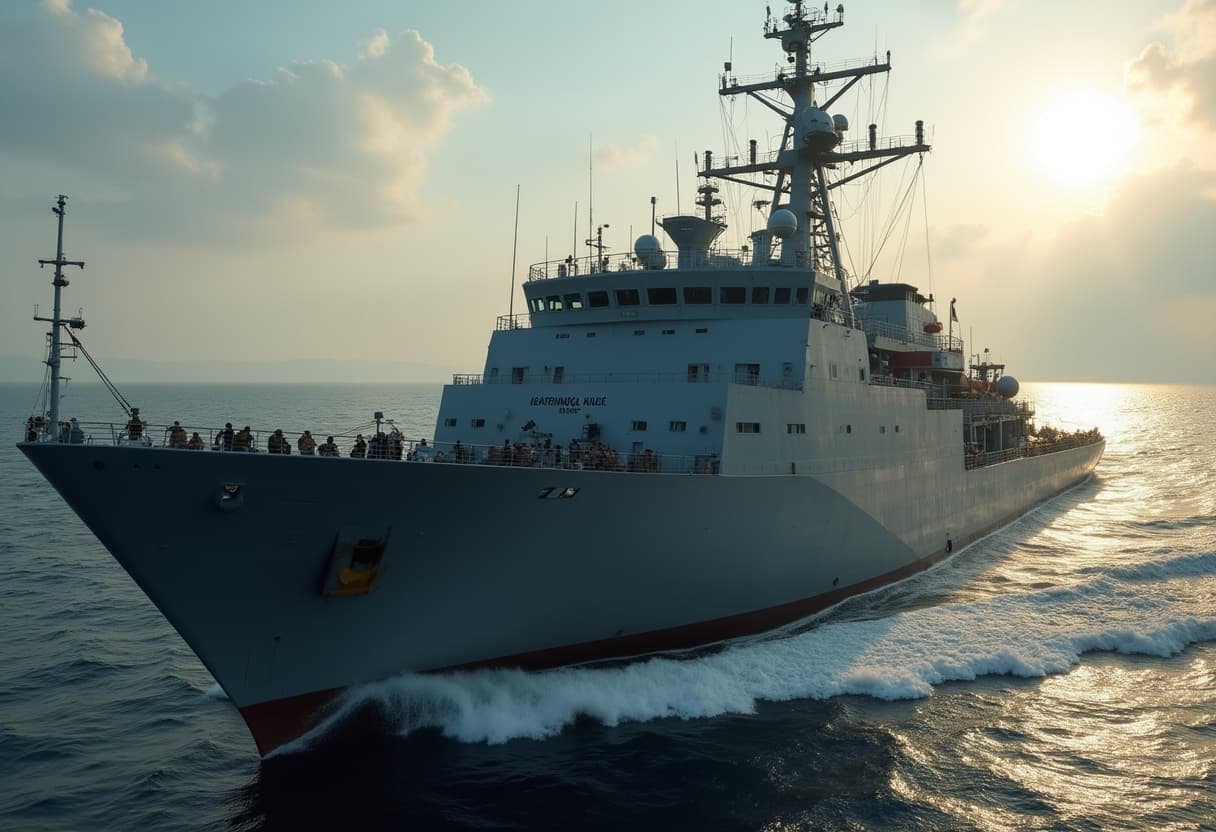
In the dead of night, the Venezuelan capital fell into darkness. Explosions echoed through the city as U.S. military helicopters swiftly disabled air defenses and captured President Nicolás Maduro. This bold operation, authorized under the Trump administration, has sent shockwaves across Latin America, exposing deep divisions and reshaping the geopolitical landscape in the region.
Polarized Reactions Across Latin America
The event has ignited fierce debate throughout the hemisphere. Left-wing leaders interpret the U.S. move as a clear expression of imperial overreach—a stark reminder of America’s history of interventionism motivated by economic interests, especially related to natural resources such as oil. Countries including Brazil, Mexico, Colombia, Chile, Spain, and Uruguay, governed by left-leaning administrations, condemned the strike in unison, highlighting the threat such actions pose to national sovereignty and regional stability.
Conversely, right-wing figures like Argentina’s President Javier Milei hailed the operation as a long-overdue rescue mission, aimed at dismantling a corrupt, authoritarian regime and unlocking Venezuela’s economic potential. Milei’s stark framing — "You are either on the side of GOOD, or you are on the side of EVIL" — encapsulates the stark ideological divide.
Trump’s New Doctrine: Reasserting U.S. Dominance
President Trump has framed this intervention as the realization of a modern Monroe Doctrine — a concept dating to the 19th century intended to deter European interference. Trump’s so-called "Donroe Doctrine" seeks to reaffirm uncontested American supremacy in the Western Hemisphere. His administration’s shift from promoting democracy and trade toward a more transactional, interest-driven approach is unmistakable. Venezuela’s oil reserves, referenced over 20 times by Trump post-operation, are central to this strategy.
Historical Context and Regional Unease
For many Latin Americans, this operation stirred memories of past U.S. interventions in their backyard—ranging from Cold War-era coups to invasions in Grenada and Panama. Celso Amorim, a seasoned Brazilian diplomat and former defense and foreign minister, warned that this open assertion of military interventionism without even the pretense of defending democracy signals a troubling departure from regional norms.
Amorim emphasized, "There isn’t even the excuse, ‘we went there to defend democracy.’ This is clearly about economics and dominance.” His observations call attention to the underlying motivations masked by geopolitical rhetoric.
The Complex Web of Latin American Diplomacy
Brazil’s President Luiz Inácio Lula da Silva convened urgent meetings and issued statements condemning the U.S. action as a violation of international law requiring a robust global response. The Community of Latin American and Caribbean States convened an emergency session where Venezuela’s Foreign Minister Yván Gil warned of a dangerous precedent that threatens the sovereignty of all nations in the region.
However, reactions from other countries reveal fissures that challenge the possibility of a unified regional stance. Conservative leaders often sent lower-level representatives, reflecting hesitancy to confront the United States openly, especially given economic interdependencies. Ecuador’s President Daniel Noboa’s declaration that the “narco-Chavista criminals”’ time is coming underscores a narrative that views Maduro’s regime as illegitimate and deserving of external pressure.
The Diplomatic Tightrope and Emerging Alliances
Mexico’s President Claudia Sheinbaum issued measured criticism, reflecting the delicate balancing act many leaders face between condemning intervention and managing critical bilateral relations—particularly amidst U.S. domestic concerns about drug cartels along the border.
Meanwhile, Brazil’s economic pivot toward China has given Lula leverage to adopt a more confrontational tone with Washington. Celso Amorim pointed out that aggressive U.S. interventions might inadvertently accelerate Latin America’s deepening ties with China, as countries seek alternative partners to counterbalance American influence.
Future Outlook: Fragmentation, Resilience, and the Challenge of U.S. Hegemony
Experts like former Mexican Ambassador Arturo Sarukhán suggest that the fractured regional responses may persist unless there is a full-scale U.S. occupation of Venezuela—an unlikely scenario given the geopolitical risks. Instead, nations are increasingly retreating into transactional diplomacy and cautious posturing rather than cohesive resistance.
Trump’s recent remarks hint at the possibility of further actions targeting Cuba and even Greenland, signaling a broader ambition to reshape hemispheric relations and natural resource control. This raises critical questions about regional sovereignty, the future of U.S.-Latin America relations, and the role of global powers in the Western Hemisphere.
Editor’s Note
The capture of Nicolás Maduro by U.S. forces underscores a pivotal moment in the Americas, reviving debates over intervention, sovereignty, and geopolitical dominance. It forces us to ask: Will Latin American nations overcome ideological rifts to form a united front defending their autonomy, or will competing interests drive further fragmentation? As global powers vie for influence, the region’s path forward remains fraught yet crucial for hemispheric stability.