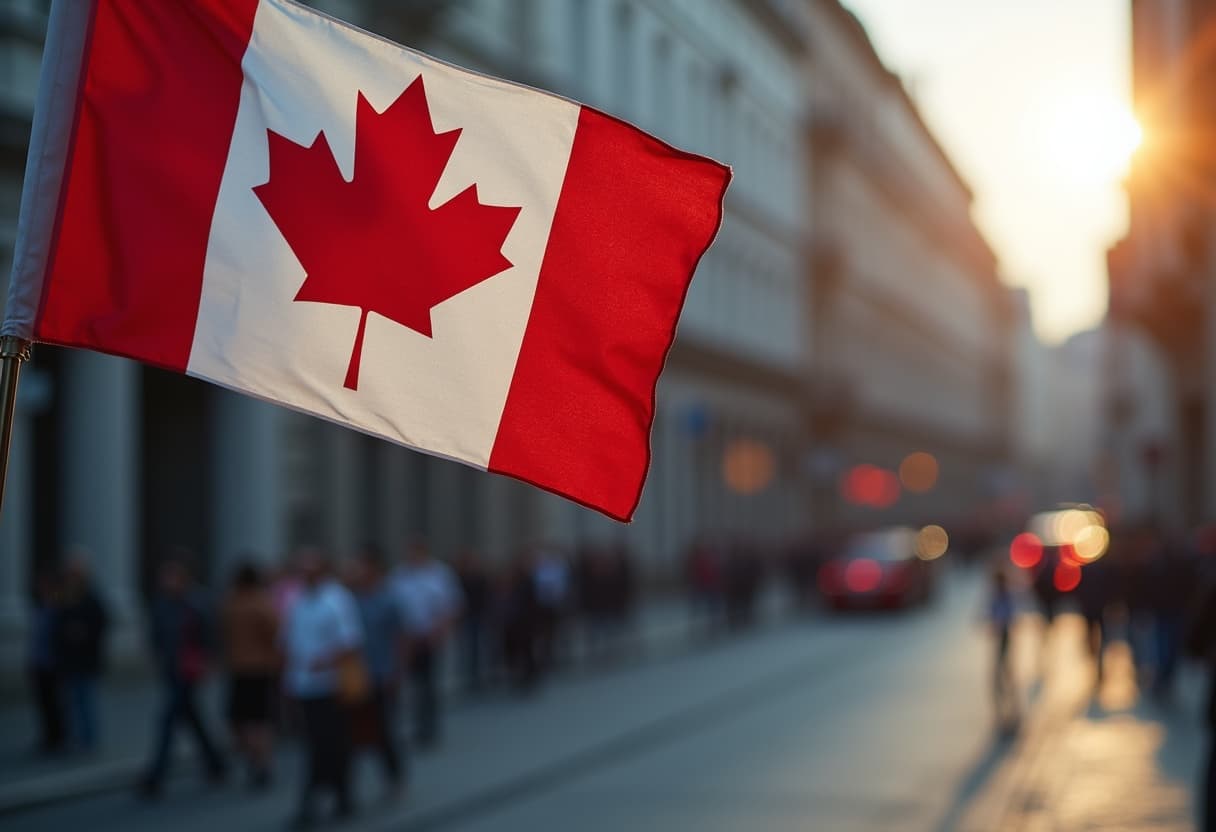

Reevaluating Canada’s Safe Third Country Agreement with the U.S.
Canada's longstanding policy that classifies the United States as a "safe third country" for migrants seeking asylum is facing renewed criticism and calls for change. This agreement allows Canada to return asylum seekers who first arrive in the U.S., effectively blocking many migrants from applying for protection upon crossing into Canada.
Recently, a former Liberal immigration minister publicly suggested that Canada should reconsider and potentially abandon this policy. The argument stems from emerging evidence that highlights serious human rights concerns about the treatment of migrants in U.S. immigration enforcement programs—raising the stakes for Canada’s border and refugee policies.
Forced Deportations and Reports of Abuse
Investigative reports have revealed troubling details about migrants deported from the U.S. to third countries under controversial programs implemented during the Trump administration. A notable example involves Venezuelan men who were forcibly sent to El Salvador, only to face brutal conditions in a maximum-security prison. Interviews with 40 of these men, conducted by journalists from The New York Times, uncovered accounts of severe mistreatment, including physical abuse and sexual assault by guards. Some detainees described feeling so hopeless that they attempted suicide.
This grim episode culminated in a diplomatic settlement in July 2025, under which around 160 Venezuelan migrants were released in exchange for the freedom of 10 Americans and U.S. residents held in Venezuela. Yet, the broader implications linger: such abuses challenge the presumption that the U.S. is a "safe" third country for asylum seekers.
The Ongoing Human Toll at Borders
The plight of these migrants is not an isolated incident. Across the U.S., stark enforcement actions continue, with federal agents detaining migrants on city streets and asylum seekers facing systemic barriers at official border crossings. Policies increasingly prevent migrants from lodging asylum claims at the border, often bypassing crucial due process rights.
This tightening of U.S. immigration policy has put pressure on Canada's refugee system, prompting urgent debates among policymakers, human rights advocates, and immigration experts. Critics argue that Canada's Safe Third Country Agreement perpetuates a vulnerable limbo for many migrants caught between two borders.
Expert Commentary: What’s at Stake for Canada and Migrants?
Emily Grant, a Canadian immigration law expert at the University of Toronto, notes, "The Safe Third Country Agreement was designed assuming the U.S. immigration system was fair and humane. However, with evolving enforcement practices and documented abuses, Canada must reconsider whether this framework aligns with its commitment to protect refugees and uphold human rights."
Moreover, from an economic and policy perspective, some analysts warn that maintaining the status quo could strain Canada's asylum infrastructure and foster cross-border migration irregularities, as desperate migrants seek alternative routes, including dangerous unofficial crossings like Roxham Road in Quebec.
Underreported Perspectives
- The experiences of migrants who face deportation to countries where their safety is compromised often receive limited mainstream coverage.
- Many community organizations in Canada working with asylum seekers emphasize how the Safe Third Country Agreement contributes to prolonged uncertainty and hardship.
- Legal challenges in Canada seek to test the constitutionality of returning asylum seekers to the U.S., given evolving circumstances.
Looking Forward: Policy Options and Human Rights
As Canada prepares its next immigration frameworks, policymakers must wrestle with complex questions: Does the Safe Third Country Agreement reflect contemporary realities on the ground? How can Canada balance border integrity with its international obligations under refugee law?
Potential reforms may include suspending or renegotiating the agreement, expanding access to asylum claims regardless of prior U.S. entry, and strengthening protections for vulnerable populations.
Editor’s Note
The debate over Canada’s Safe Third Country Agreement underscores a critical crossroads in North American migration policy. With documented abuses affecting migrants returned to the U.S., the assumption of safety that underpins this policy is rightly being questioned. These developments compel Canadians—and policymakers—to reevaluate the balance between sovereignty, security, and humanitarian commitments. As migration patterns evolve and human rights concerns mount, the path forward demands nuanced, compassionate, and evidence-based responses that honor Canada’s legacy as a refuge for those fleeing persecution.