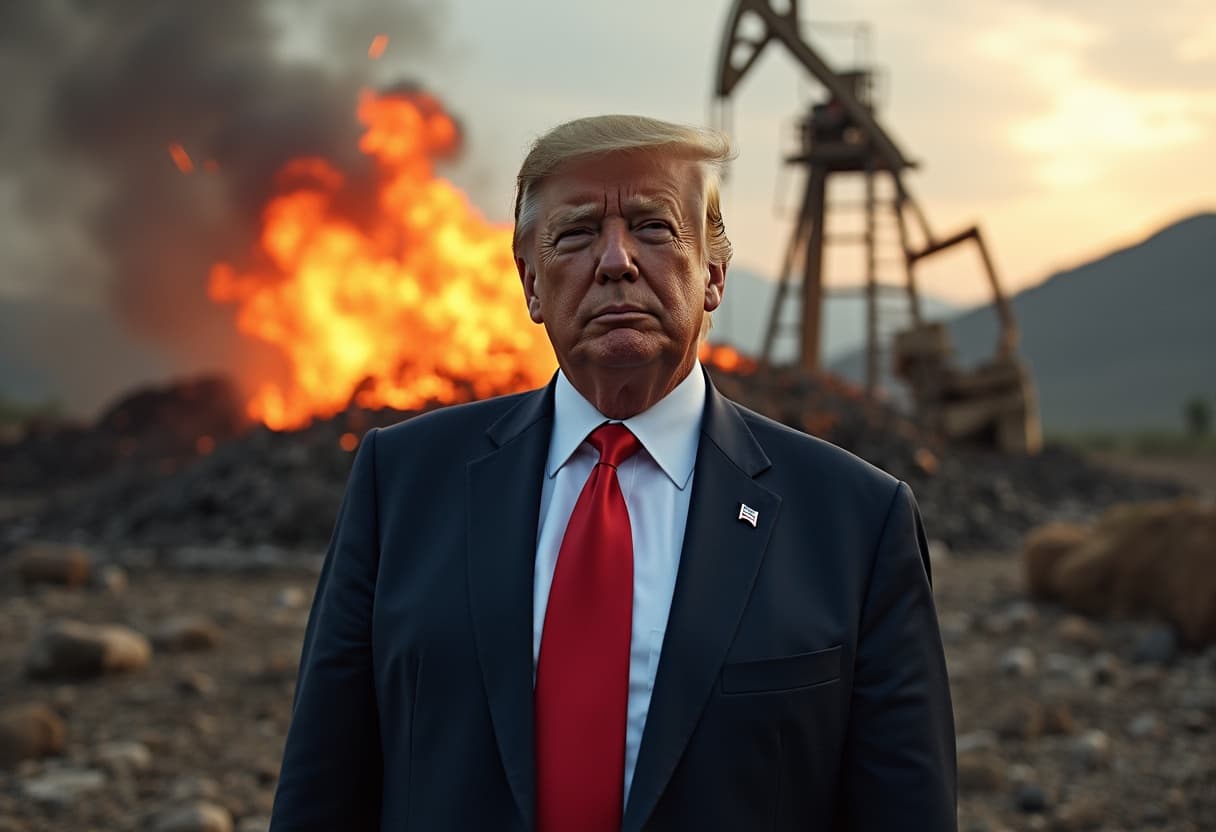
Trump’s Assertion on Venezuelan Oil Ignites Deep-Rooted National Pride
In a statement that has reverberated across international political corridors, former President Donald Trump and his administration have asserted that Venezuela effectively ‘stole’ American oil fields through historic nationalizations, claiming that the U.S. now seeks to reclaim these assets. This rhetoric, resonating with nationalist undertones, touches a particularly sensitive nerve in Venezuela, where oil is intertwined with national identity and pride.
Historical Context: The Roots of the Oil Conflict
The early 20th century saw major American oil companies investing heavily in Venezuela’s Maracaibo oil fields, generating substantial profits that primarily benefited the United States. Over time, Venezuela’s relationship with oil shifted dramatically, especially following the rise of Hugo Chávez in the 1990s, who framed oil not merely as a resource but as an intrinsic part of Venezuelan sovereignty and birthright.
Venezuelan Oil as a Symbol of National Identity
As Alejandro Velasco, a respected historian from New York University, points out, the Venezuelan perception of oil transcends economics. “When they make the claim, ‘We’re going for land, for oil,’ it really discounts the depth to which Venezuelans understand oil as part of our birthright,” Velasco explains. For Venezuelans, oil is much like cultural staples such as baseball or beauty pageants—it’s woven into the fabric of national pride and collective identity.
The Political and Economic Stakes
Despite Venezuela’s vast oil reserves ranking among the world’s largest, decades of mismanagement, corruption, and stringent U.S. sanctions have precipitously reduced its current production levels. The Trump administration’s claims have intensified sanctions, including targeting tankers bound to and from Venezuela, under the broader goal of pressuring President Nicolás Maduro’s government.
- Sanctions and Economic Pressure: The assertions surrounding nationalized oil assets underpin U.S. sanctions, impacting Venezuela’s fragile economy.
- Geopolitical Influence: Venezuela has historically leveraged oil revenue to expand its influence, notably in Latin American diplomacy and politics.
- Energy Security Dynamics: The debate highlights broader U.S. concerns regarding access to energy resources amid shifting global markets.
Underreported Angles: What’s Often Overlooked?
While much of the discourse centers on ownership and geopolitics, less attention is paid to:
- The Environmental Impact: The legacy of oil extraction in Venezuela carries significant environmental costs that affect the local population.
- Humanitarian Dimension: The country's economic crisis, exacerbated by sanctions, deeply affects everyday Venezuelans beyond political rhetoric.
- The Role of Multinational Corporations: Past partnerships and their long-term effects on Venezuela's development and sovereignty are complex and nuanced.
Expert Insight: The U.S. Policy Lens
From a U.S. policy perspective, the claims reflect more than nationalist posturing—they align with strategic interests in energy security and regional influence. However, experts caution that such narratives may oversimplify longstanding historical grievances and risk inflaming tensions.
Dr. Maria Gonzalez, a Latin American energy policy expert, observes, “The American narrative of reclaiming stolen assets plays well domestically but can hinder diplomatic efforts by ignoring Venezuela’s legitimate concerns about sovereignty and the historical asymmetry in oil profits.”
Looking Ahead: A Landscape Fraught With Complexity
The conversation about oil between the U.S. and Venezuela remains a potent mix of history, nationalism, and geopolitics. As both countries navigate future relations, understanding the deep emotional and cultural ties to oil in Venezuela is critical. Policies framed without this nuance risk alienating populations and complicating diplomatic resolutions.
Editorial Note
The dispute over oil assets between the U.S. and Venezuela underscores the enduring power of natural resources as symbols of national identity and geopolitical leverage. As debates continue, readers should consider the complex historical grievances, humanitarian realities, and environmental challenges often overshadowed by political rhetoric. The path forward requires empathy, informed dialogue, and recognition of the multifaceted nature of energy sovereignty.