The Hidden Underwater Battle Against Drug Trafficking
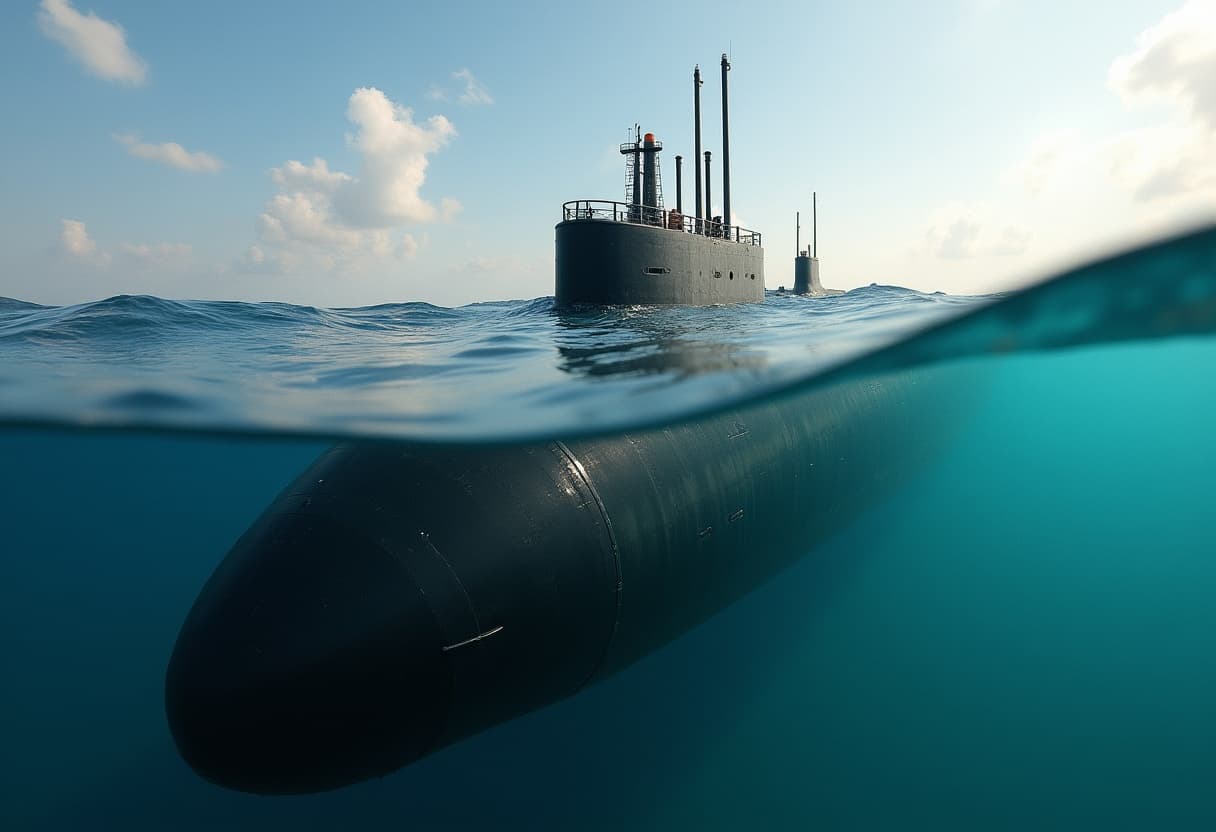
Along the bustling waterfront of Guayaquil, Ecuador's largest city, a chilling display offers a rare glimpse into the elusive world of underwater drug smuggling. Here, at a sprawling naval base, the Ecuadorean Navy exhibits a collection of confiscated vessels — from battered fishing boats to sleek semi-submersibles and even a fully submersible metal submarine used by drug cartels to transport massive cocaine shipments across international waters.
The Ocean’s Silent Highways: How Cartels Outsmart Authorities
Despite the relentless efforts of Ecuador’s coast guard, officials wear the weight of a Sisyphean task. Drug traffickers consistently stay several moves ahead, deploying sophisticated submarines to evade detection. “Our sailors put their lives on the line daily,” says the coast guard commander, whose weary gaze lingers over one seized submersible. “Yet the cocaine keeps flowing like the tides—unstoppable, hidden beneath the waves.”
While the Ecuadorian Navy maintains two submarines in their own fleet, the cartels' underwater arsenal remains a mystery but is believed to be far larger and more elusive. Over the past 15 years, Ecuador has captured roughly a dozen of these semi- and fully submersible vessels. Yet, according to U.S. authorities, these represent only a fraction of the narcotics submarines operating globally, highlighting a vast, underreported maritime frontier in the war on drugs.
Regional and Global Implications
This cat-and-mouse game reveals the shifting dynamics of international drug trafficking. The U.S. military's recent attack on a semi-submersible vessel in the Caribbean, which resulted in fatalities including an Ecuadorean man repatriated, underscores the high stakes of interdiction missions. These operations often ignite diplomatic tensions and raise ethical questions about use of force in international waters.
Experts note that these submarines represent a dangerous evolution in narcotics smuggling—moving beyond traditional surface ships, aircraft, or human couriers. The ability to travel submerged, avoiding radar and visual detection, poses a formidable challenge for maritime law enforcement. Moreover, the investment and engineering expertise required to build these vessels signal lucrative cartel operations backed by substantial resources.
Why Are These Vessels So Hard to Detect?
- Low Profile: Semi-submersibles ride low in the water, with only a small portion visible above the surface.
- Advanced Design: Many are custom-built with fiberglass or other radar-absorbing materials.
- Remote Operations: Some can be operated autonomously or by minimal crew, limiting exposure.
- Global Reach: Capable of crossing vast ocean distances to reach consumer markets.
The Human Toll and Policy Challenges
Beyond the vessels themselves, these operations impact numerous lives—from the smugglers risking perilous journeys, the coast guards who place themselves in harm's way, to communities suffering the fallout of drug trafficking. There is a mounting call for enhanced international cooperation, not only in interdiction but also in addressing the root causes driving such illicit supply chains.
Looking Ahead: Can New Technologies Turn the Tide?
Emerging technologies such as satellite surveillance, drones, and AI-driven maritime domain awareness tools hold promise in detecting these stealth vessels. However, the sophistication of drug cartels demands adaptive, integrated responses combining intelligence-sharing, regional partnerships, and legal frameworks that navigate jurisdictional complexities.
As the battle unfolds beneath the waves, the question remains: can law enforcement keep pace with traffickers who continue to innovate in the murky depths of the world's oceans?
Editor’s Note
The covert use of submarines for cocaine smuggling reveals a shadowy frontier in the global drug trade that often escapes media attention. Addressing this challenge requires an interdisciplinary approach involving technological innovation, policy reform, and robust international alliances, especially between countries like the U.S. and Ecuador. Readers are invited to consider not only the high-stakes interdiction efforts but also the broader socio-economic forces fueling this underwater arms race.