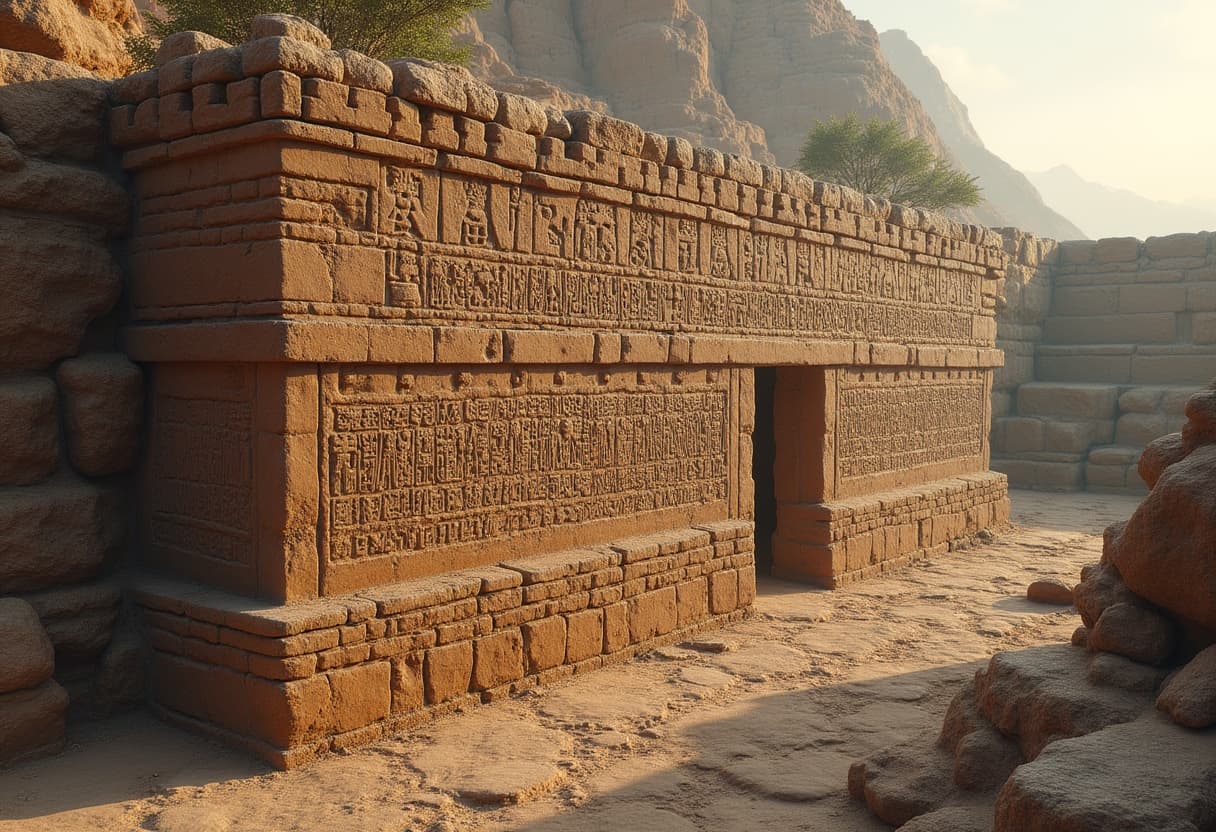
Unlocking the Secrets of Teotihuacan: A New Linguistic Breakthrough
Teotihuacan, once a thriving metropolis near modern-day Mexico City housing an estimated 125,000 inhabitants at its peak, remains one of the most captivating enigmas of the ancient Americas. Its colossal pyramids inspired awe among the later Aztecs, yet the language behind the city's mysterious glyphs has defied conclusive interpretation for centuries.
While archaeologists have successfully deciphered Maya and Aztec scripts, the Teotihuacan glyphs — found on murals, ceramics, and architecture — have presented a stubborn puzzle, keeping scholars divided and theories plentiful but fragmented.
A Shift from Aztec to Ancient Linguistic Roots
In a recent study published in Current Anthropology, a team led by Christophe Helmke and linguist Magnus Pharao Hansen from the University of Copenhagen introduced a fresh perspective. Instead of correlating the glyphs to the later Nahuatl language, spoken by the Aztecs, they suggest exploring Uto-Aztecan — a far older linguistic family believed to coincide more closely with Teotihuacan’s era.
"We approached the problem by reconstructing the language that was most likely contemporary with the Teotihuacan writing system," Helmke explains. Hansen meticulously reconstructed the ancient tongue through its modern descendants — including Nahuatl, Cora, and Huichol — creating a linguistic family tree bridging centuries.
The Promise and Pitfalls of Decipherment
This methodology yielded promising results. The researchers identified several glyphs that correspond with reconstructed words, with another 18 probable matches awaiting confirmation. This novel approach invigorates the field by marrying linguistic reconstruction with archaic scripts, a method previously unattempted with Uto-Aztecan and Teotihuacan glyphs.
However, the work faces significant hurdles. Only around 300 engraved texts have been discovered from Teotihuacan — minuscule compared to the thousands of Aztec and Maya inscriptions that underpin their decipherments. The limited material constrains linguistic validation, forcing scholars to tread carefully amid fragmentary evidence.
Expert Community Reacts: Hope Meets Caution
Reactions among professional archaeologists and linguists showcase a mix of enthusiasm and skepticism. Joyce Marcus of the University of Michigan applauded the research for ushering in new voices, but underscored the inherent challenge due to the scant inscriptions:
"The major problem has always been the tiny corpus of hieroglyphs from Teotihuacan; there are still so few examples of each hieroglyph."
Conversely, linguist Lyle Campbell from the University of Hawaii expressed reservations about the new interpretations, highlighting difficulties in defining glyph shapes and meanings amid sparse data, emphasizing the speculative nature of current readings.
David Stuart, an archaeologist at the University of Texas at Austin, called the proposal “an important contribution” but insisted on the need for further testing, reminding us of the thorny complexity of Teotihuacan’s multilingual society.
Teotihuacan’s Multilingual Mosaic
The city's status as a cosmopolitan hub housing diverse ethnic groups and languages complicates linguistic analysis, as thousands of residents in 500 A.D. likely spoke different tongues on its bustling avenues.
"The social fabric of that ancient community makes the question of language very messy," Stuart noted. "There were no doubt many languages being spoken on the street if you walked around 500 A.D."
This linguistic diversity challenges assumptions of a single writing system and raises deeper questions about the purpose and audience of Teotihuacan’s glyphs.
The Road Ahead: Unexplored Territories and Future Discoveries
Despite over a century of excavation, less than 5 percent of Teotihuacan has been thoroughly unearthed. Helmke and Hansen remain hopeful that further digs may uncover more inscriptions, providing critical data to validate or adjust their interpretations.
"The site’s immense scale means many texts may still lie hidden," Helmke said. "Our findings offer a framework others can now test and refine as new materials emerge."
Editor's Note
Teotihuacan’s glyphs remain one of archaeology’s most enigmatic legacies. This innovative linguistic approach reinvigorates the quest but also underscores the complexities of ancient multilingual urban centers. As future discoveries unfold, questions linger: How did language shape identity and power in Teotihuacan? What stories lie buried, waiting to be read? Amid tantalizing clues, the ancient city continues to whisper, inviting us to listen and learn.