U.S. Military Expands Footprint in Central America with Deployment to El Salvador
In a strategic move reflecting the United States' deepening military presence in Central America, at least three U.S. military aircraft, including the formidable AC-130J Ghostrider attack plane, have begun operating out of El Salvador’s main international airport since mid-October. This development underscores a significant escalation of U.S. forces and assets within the Caribbean and Latin American region amid ongoing counternarcotics operations and geopolitical posturing.
The Arrival of Advanced U.S. Aircraft in El Salvador
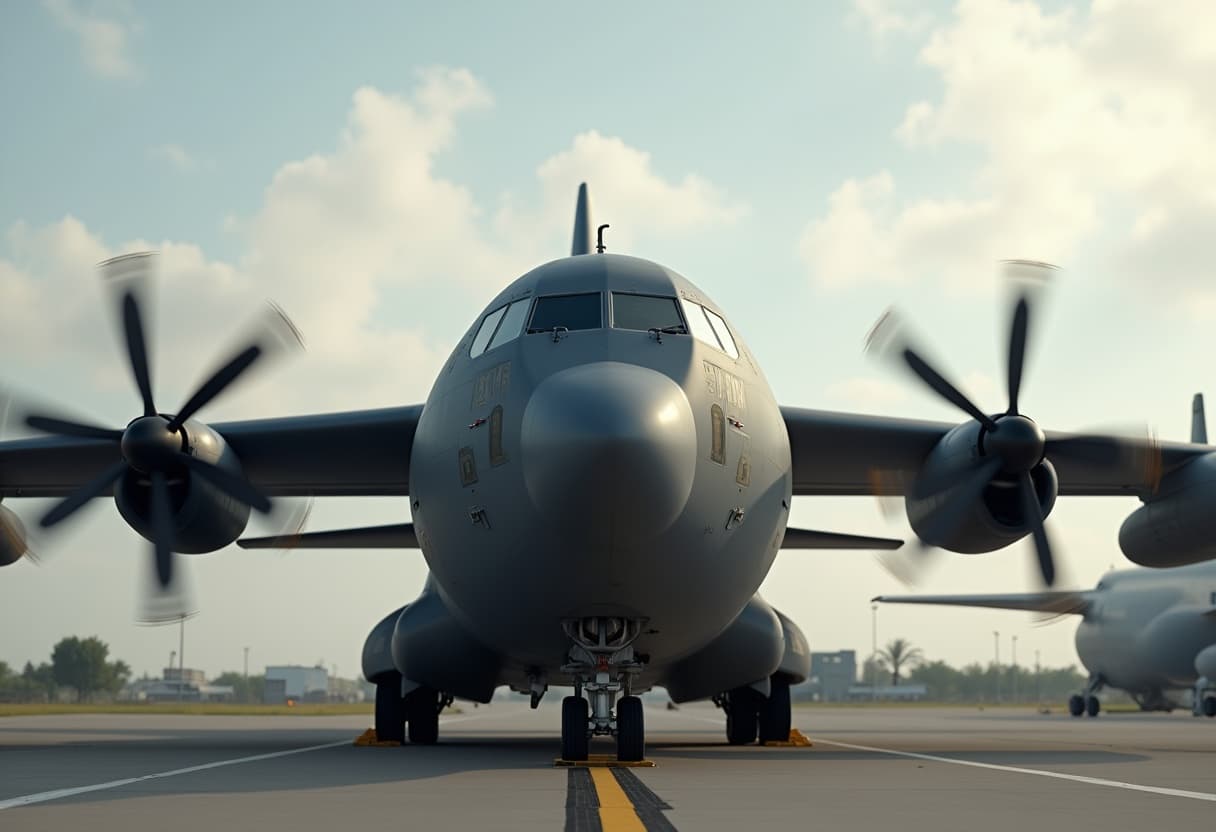
Satellite imagery combined with air traffic control communications and flight tracking data have confirmed the presence of these aircraft at Comalapa International Airport, a location characterized as a Cooperative Security Location previously utilized for counternarcotics missions. Notably, the arrival included the AC-130J Ghostrider — a gunship renowned for its capability to deliver precise and devastating firepower against ground and maritime targets with an array of missiles, cannons, and machine guns. Operated by Air Force Special Operations Command, this aircraft typically undertakes highly sensitive missions requiring advanced tactical proficiency.
Alongside the Ghostrider, a Navy P-8A Poseidon reconnaissance aircraft has been active in the region, capable of extensive intelligence gathering from high altitudes and armed with torpedoes and anti-ship missiles, further signaling an operational focus extending to both surveillance and potential strike capabilities. Complementing these is the presence of an unmarked C-40 Clipper jet, an enigmatic asset infrequently seen in public domains, whose mission and capabilities remain somewhat ambiguous but whose deployment alongside strike and reconnaissance aircraft is unusual and indicative of substantive operational intent.
Context: Regional Military Buildup and Strategic Interests
This military expansion coalesces with a broader deployment of roughly 10,000 U.S. troops supported by drones, bombers, nearly a dozen Navy warships, and the imminent arrival of the aircraft carrier Gerald R. Ford. Initiated in late August, the deployment appears driven by intensified counternarcotics missions and preparations linked to U.S. policy objectives in Venezuela and the greater Caribbean basin.
Experts note that hosting such aircraft capable of airstrikes marks a significant shift in El Salvador’s role in U.S. military strategy, reflecting the exceptionally close relationship between the U.S. administration and Salvadoran President Nayib Bukele. Bukele has notably collaborated with U.S. immigration enforcement, detaining deportees in harsh conditions, aligning Salvadoran policy closely with Washington’s agenda.
John Walsh, director of drug policy at the Washington Office on Latin America, remarks, "In this theater, the U.S. and Salvadoran governments appear unusually synchronized in their approach, particularly in law enforcement and security matters."
Operational Insights and Legal Questions
Communications between the aircraft and air traffic controllers reveal that the P-8A has flown at least half a dozen missions out of El Salvador, while the AC-130J and Air Force jet have each completed at least one confirmed sortie. Typically, these aircraft begin flights transmitting standard position and navigation information but subsequently cease contact as they enter "due regard" military operations mode—indicating the commencement of sensitive or classified missions over international waters, particularly the eastern Pacific Ocean adjacent to El Salvador.
However, the legal framework underpinning these operations remains clouded. Critics and international actors have challenged the Trump administration's counternarcotics strikes in the region, calling into question their compliance with international law and sovereignty principles.
Admiral James Stavridis, former commander of U.S. Southern Command, contextualizes these developments: "While this base historically supported humanitarian, disaster relief, and counternarcotics efforts — a form of soft power — it is increasingly utilized to project hard power in the region," highlighting a clear shift towards a more aggressive military posture.
Regional Implications and Underreported Dimensions
This deployment invites critical examination of broader U.S. strategy in Latin America amid rising geopolitical tensions. It raises vital questions about the sovereignty of regional nations hosting foreign military assets and the long-term impact on civil-military relations locally. How will El Salvador balance its cooperation with the U.S. against domestic political pressures?
Moreover, the presence of such advanced military assets so close to U.S. borders underscores the increasing militarization of counternarcotics operations, blending them with broader security and geopolitical aims. Observers must consider the implications for regional stability, human rights, and international law compliance.
Conclusion: A Strategic Pivot in the Americas
El Salvador’s emerging role as a hub for sophisticated U.S. military operations adds a new chapter to the narrative of American engagement in Latin America. As the region witnesses an unprecedented confluence of military power, diplomacy, and counternarcotics efforts, understanding the full scope and consequences of these moves remains imperative.
Editor’s Note:
- U.S. deployment in El Salvador reflects broader shifts towards projecting hard power under the guise of counternarcotics.
- The transparency and legality of these operations remain ambiguously defined, inviting further scrutiny from policymakers and international observers.
- Readers should consider how increased militarization affects diplomatic relations, regional stability, and the human rights situation within host countries like El Salvador.
As the U.S. continues to embed military assets in Central America, monitoring the balance between security objectives and respect for sovereignty will be critical. These developments also challenge us to think more deeply about the interconnected nature of migration, drug trafficking, and military strategy in an ever-complex hemisphere.